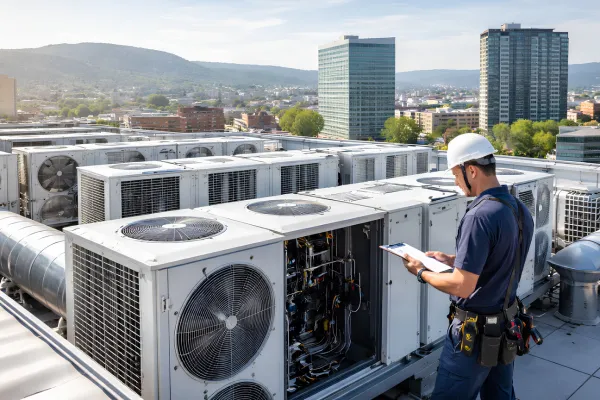
HVAC Asset Management for Property Managers in Pretoria
HVAC Asset Management for Property Managers in Pretoria
How structured asset planning protects performance, budgets, and long term property value
Airconditioning and ventilation systems are among the most critical and most expensive assets within commercial buildings, estates, office parks, and sectional title developments across Pretoria. Yet many property portfolios still operate reactively, addressing breakdowns only after complaints arise or equipment fails.
HVAC asset management shifts this approach from reactive repair to structured lifecycle planning. This article explains how Pretoria property managers can implement practical HVAC asset management strategies to reduce risk, forecast expenditure, and protect building value.
Why HVAC Asset Management Matters
For property managers, HVAC systems influence:
Tenant comfort
Lease retention
Energy consumption
Maintenance budgets
Insurance exposure
Regulatory compliance
Unlike visible upgrades such as façade improvements or security enhancements, HVAC infrastructure operates behind ceilings and in plantrooms. Because it is not always seen, it is often under documented.
Without structured asset management, buildings experience:
Repeated emergency call outs
Unplanned capital expenditure
Inconsistent service standards
Shortened equipment lifespan
Energy inefficiency
Asset management ensures every system is tracked, assessed, and maintained according to documented strategy.
What HVAC Asset Management Actually Involves
Effective HVAC asset management goes beyond servicing. It includes structured documentation, performance tracking, and replacement forecasting.
Key components include:
Comprehensive asset register
Equipment age tracking
Maintenance history logs
Inspection reporting
Performance benchmarking
Lifecycle replacement forecasting
This creates clarity around what equipment exists, its condition, and its projected lifespan.
For body corporates and Homeowners Associations in Pretoria, this level of visibility supports informed budgeting and transparent financial planning.
Building a Proper HVAC Asset Register
An asset register is the foundation of structured management.
Each entry should include:
Equipment type and location
Make and model
Motor size and phase
Installation date
Last service date
Warranty information
Associated drives or pumps
For large commercial sites, this may include chillers, cooling towers, air handling units, extraction fans, pumps, and Variable Speed Drives.
Without this register, budgeting becomes guesswork.
Understanding Lifecycle Planning
HVAC equipment does not fail randomly. It follows predictable lifecycle patterns influenced by environment, load, and maintenance quality.
Typical lifecycle considerations:
Small commercial airconditioning units, 8 to 12 years
Industrial motors, 10 to 20 years depending on duty cycle
Pumps and mechanical assemblies, variable based on alignment and load
Variable Speed Drives, 7 to 15 years depending on environment and cooling
Pretoria’s heat, dust, and extended operating hours can shorten these timelines.
Lifecycle planning allows property managers to forecast capital expenditure instead of facing unexpected plant failure.
Budget Forecasting for Pretoria Property Portfolios
Structured asset management enables clear differentiation between operational expenditure and capital expenditure.
Operational expenditure includes:
Scheduled servicing
Filter replacements
Inspection programmes
Minor component repairs
Capital expenditure includes.
Motor rewinds
Major pump replacements
Cooling tower upgrades
Drive replacement
Full system retrofit
By reviewing condition reports annually, property managers can allocate reserves strategically, avoiding special levies or emergency funding requests.
For sectional title developments, this transparency builds trust among trustees and residents.
Performance Benchmarking and Energy Oversight
Asset management should also include performance evaluation.
Key indicators include:
Motor current draw trends
Bearing temperature patterns
Vibration analysis results
Energy consumption data
Drive fault frequency
Tracking these indicators over time highlights inefficiencies before breakdown occurs.
In commercial office parks, inefficient HVAC performance often appears first as rising electricity bills rather than visible system failure.
Monitoring mechanical and electrical data supports cost control.
Risk Mitigation Through Structured Inspections
Reactive maintenance exposes buildings to operational and reputational risk.
Consider the consequences of a full HVAC failure:
Tenant complaints
Loss of productivity
Lease disputes
Food spoilage in retail environments
Potential insurance complications
Routine inspections identify developing issues such as:
Coupler misalignment
Bearing noise
Seal leakage
Drive parameter irregularities
Overheated terminations
Addressing these issues early reduces emergency incidents.
Asset Management in HOAs and Sectional Title Developments
In Pretoria estates and body corporates, HVAC assets often serve shared facilities such as:
Clubhouses
Gyms
Lobbies
Basement ventilation
Centralised plantrooms
Trustees require documented condition reports to justify maintenance budgets and reserve planning.
Without structured documentation, maintenance decisions appear reactive or inconsistent.
Professional inspection reporting supports governance and financial accountability.
Industrial and Commercial Portfolio Considerations
For larger commercial portfolios, asset management must align with operational continuity planning.
Facilities relying on continuous cooling or ventilation benefit from:
Redundancy planning
Spare motor strategy
Workshop turnaround agreements
Drive parameter backups
Preventative bearing monitoring
Integrated electrical and mechanical oversight ensures that motors, pumps, drives, and ventilation systems are treated as a single operational ecosystem.
When Asset Management Is Missing
Signs that HVAC asset management is lacking include:
Frequent emergency call outs
Repeated motor failures
Unclear maintenance history
No documentation of inspections
Unexpected capital replacement decisions
Inconsistent contractor engagement
These issues increase long term costs and reduce system reliability.
Integrating Workshop and Field Support
Effective asset management requires both on site inspections and workshop capability.
Field services identify developing faults through:
Bearing temperature checks
Vibration monitoring
Coupler inspections
Leak detection
Drive verification
Workshop services then address required repairs such as:
Motor rewinds up to 250 kW
Pump servicing
Gearbox repairs
Drive replacement
This integrated approach ensures that identified issues are resolved quickly and professionally.
Why Structured HVAC Asset Management Protects Property Value
Comfort and system reliability influence tenant satisfaction and retention. Reliable HVAC performance reduces complaints and supports long term occupancy.
From an investor perspective, well maintained mechanical infrastructure enhances property valuation by reducing deferred maintenance risk.
Buildings with documented asset management plans present lower operational uncertainty.
In Pretoria’s competitive property environment, infrastructure reliability supports both financial and reputational stability.
Why ACCM Airconditioning Supports Asset Management in Pretoria
ACCM Airconditioning provides integrated field inspections and in house workshop support across Pretoria and Gauteng.
Airconditioning service and maintenance
Ventilation and extraction system support
Motor rewinds up to 250 kW
Pump and gearbox servicing
Variable Speed Drive supply and inspection
Bearing temperature and vibration checks
By combining mechanical and electrical expertise, ACCM supports structured asset planning rather than reactive repair.
“Property performance depends on infrastructure reliability. When HVAC assets are documented, inspected, and planned for properly, breakdowns become predictable rather than disruptive.”
ACCM Airconditioning Technical Team
HVAC asset management transforms how Pretoria property managers approach airconditioning and mechanical systems. Instead of reacting to breakdowns, structured documentation, inspection, and lifecycle planning provide clarity and financial control.
With accurate asset registers, performance tracking, and integrated workshop support, facilities operate more reliably and budgets become predictable.
For commercial buildings, estates, and sectional title developments, HVAC asset management is not an optional administrative task. It is a core component of responsible property management and long term asset protection.